



🎶 Own the low notes, own the spotlight.
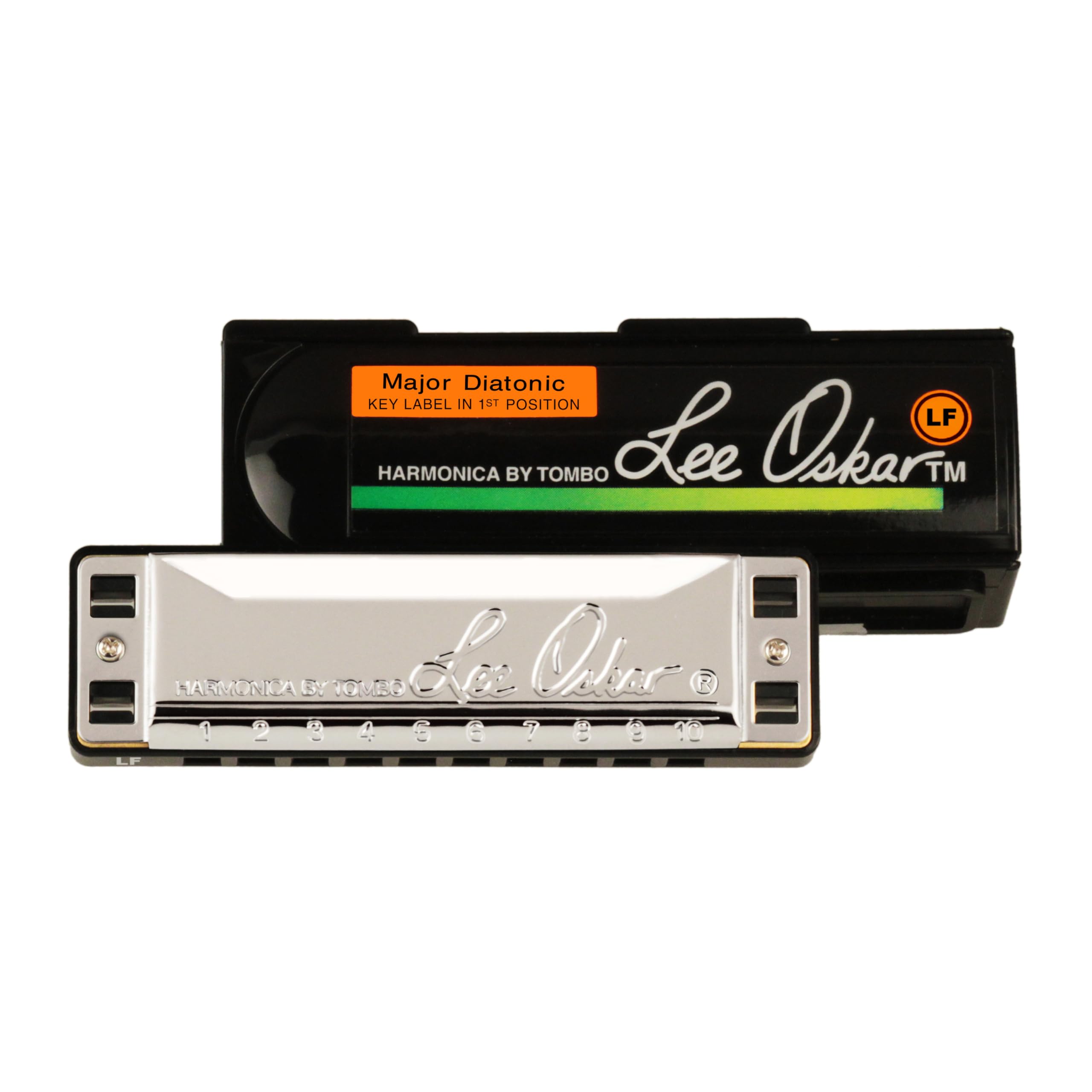
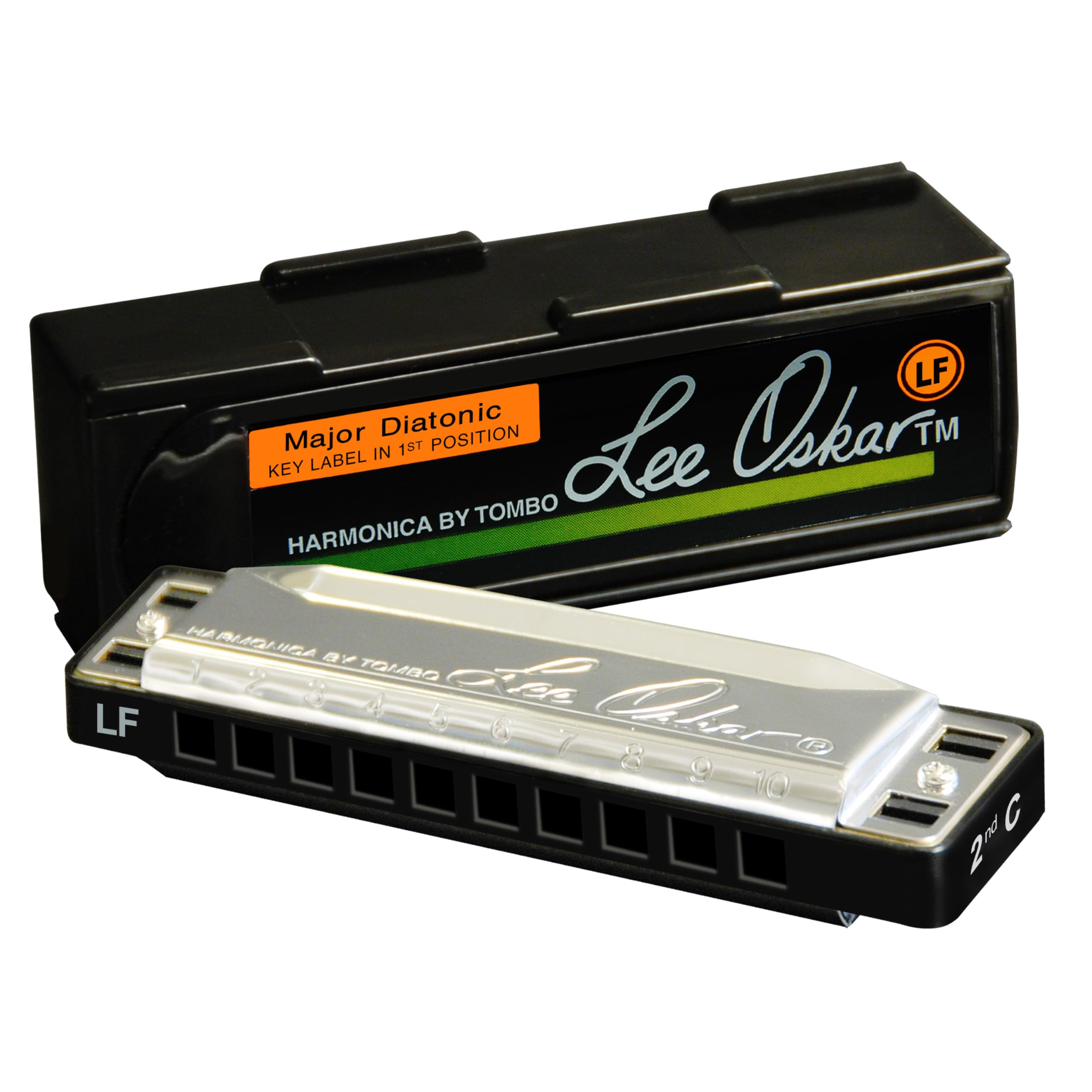
The Lee Oskar Harmonica in Low F is a precision-crafted, brass-bodied instrument made in Japan, featuring an industry-leading interchangeable system of reed plates and covers. With 18 available keys and a focus on blues and folk styles, it offers durability and versatility for both beginners and seasoned players seeking rich, deep tones.
| ASIN | B0002F6SI6 |
| Body Material | Brass |
| Color Name | Orange |
| Customer Reviews | 4.7 4.7 out of 5 stars (2,852) |
| Date First Available | July 16, 2004 |
| Instrument Key | Low F |
| Is Discontinued By Manufacturer | No |
| Item Weight | 3.36 ounces |
| Item model number | Lee Oskar 1910-Lo F Harmonica |
| Material Type | Brass |
| Musical Style | Blues |
| Product Dimensions | 2.2 x 5 x 2.2 inches |
A**R
You need the Low Key!
Explore the low notes!!! I have enjoyed discovering the low key harps. As a beginner I have tested a range of harps. Lee Oscar is an outstanding ever situation instrument. This harp is very responsive for this price point and has very durable components. The low F if my favorite
S**L
Harmonica is great
I love War and Lee Oscar playing the harmonica. The sound is very good but I need a A-flat next
L**D
One of the Best Harmonicas you can buy, and some other suggestions
I really like the sound, timbre or tone of the Lee Oscar Harmonicas. Very easy to play, and bending is not too difficult to do, but I am still very much a beginner or a little better of a player at this point. I have never had Oscar jam reeds, or have any hole to not produce musical notes, ever. The Oscars I have, always just play beautifully, no matter how much i play them, or how long they sit. My $20 dollar honer from china, I can't make this boast, nor my Japanese Manjis, although with a bit of a warm up the Suzuki Manjis open up and are playable without much delay. If I was going to recommend a beginner harmonica, it would be a Lee Oscar, or a Honer Special 20, if you were just wanting 1/ to test out harmonica and see if you liked it, and 2/ wanted to get a good quality harp to start, that could be used for a couple three years until you were an advanced intermediate or an intermediate advanced harp player. If you know in your heart that you want to play harp, and you think you might want to just buy one harp, only, I would suggest the Honer Crossover, as it can be used for the greatest range of styles: Blues, Country, Jazz, Rock, Folk. Or I would suggest the Lee Oscar or the Special 20, as they both play really easy, sound really good, and are not too difficult to bend notes on.
A**R
Great tone.
Great harp! Good value. Sounds great.
J**T
Good sound once you relearn your technique
I played around with harmonicas a bit when I was a kid. I think a lot of folks did. My dad bought my youngest son a cheep harmonica for his birthday last year and I was fiddling around with it to show him what I could remember (which wasn't much) so I decided to look at some videos online and got a bit hooked. Since then I've bought my own Hohner Special 20 C, Hohner, Marine Band F and D, and this Lee Oskar Major Diatonic G. I started with the Special 20 C and practiced quite a bit. I found I could bend pretty easily, never had trouble with the 2 hole like a lot of folks indicated they did to start, and got pretty good at single notes right away. I learned a few songs and needed to get more keys so I did my research and decided to go with the stand by, the Marine Band. Now, to start with I didn't care for the Marine Band. The first one, key of D, felt so rough against my lips compared to the Special 20 I had started with that I sanded down the reed plates to make them less of a hard corner and more rounded and smooth. That helped but the comb was rough and I didn't really notice a big improvement in the sound so after the first few days I decided there was nothing impressive about the Marine Band and folks that like them so much must just like the fact that a lot of the great blues players past used them because there wasn't a more modern choice. After forcing myself to practice with the Marine Band for 15 minutes a day I began to notice a few things. 1) My lips got use to the rough surface of the wood compared to the smooth plastic 2) I could "feel" exactly where the holes were and which hole I was playing 3) After a few minutes of playing I could hear the tone of the harp changing and becoming more "crunchy" It didn't take long before I decided my next harp would be another Marine Band and honestly those two are my preferred instruments right now. I didn't even modify the F key one to feel more smooth, I play it hard corners, biting reed plate and all. Then I went on a bit of a long hiatus from buying any new harmonicas. I thought maybe I'd receive one as a gift for my birthday or Christmas so I didn't want to ruin the gift by purchasing something for myself during that season. After my birthday, Christmas, valentines day, and nearly Easter passed without a new harp I decided it was time to treat myself. Since I had a couple Hohners I decided to try a different brand. I researched the top harmonica brands and went back and forth between the Lee Oskar and Suzuki, but having read a lot about the origin of Lee Oskar being more closely tied to the Hohners that the greats use to play I decided to make that the deciding factor and get this instrument. Now, you know where I came from to better understand the review I'm giving on this. I wanted to love this harp. I read a lot of reviews about it being too smooth sounding or something like that but I chalked that up to favoritism from people who have played for much longer than I. I read so many more positive reviews about how this is the true professionals harp and about the resiliency and customization options with custom reed plates and this and that ... I ordered the harp and hoped it would drive before the weekend but the shipping info said it was shipped and coming on Monday. I was a bit disappointed but you can't fault 2 day delivery for not showing up Friday when you ordered late on a Wednesday (like 9pm late). Then UPS showed up Friday and I pretty much put my job on hold because I was so excited to practice with the new harmonica. I opened the brown box and there was a shiny black case. One thing I love about this instrument is the case. I may order more just because the case design is a bit brilliant. You can lock multiple cases together into a kind of poor mans gig case. Since I keep my harps in their case in a compartment on my backpack (for now I've got a small pocket big enough for about 6 or 7 harps in their cases) I haven't picked up a separate gig bag for them. I like the idea of being able to lock together the cases and set them on a music stand read to go. So I excitedly opened the case and pulled out the shiny, new Lee Oskar. I put it to my lips and ran through the pentatonic blues scale and ... it sounded like crap. I was expecting this rich, soulful G compared to the bright and crunchy Marine Band F. Instead I was hitting multiple holes, losing breath, flatting notes ... it was like I picked up a harp for the first time again and I was not impressed. If I left a review right there it would have been a 1 or 2 star (probably 2 because of the cool case). However, I know that is really a grade of my technique. They advertise the larger holes as being "easier to play" and in a way it makes sense, but to make the holes larger without making the harp longer they make the space between the holes smaller. Comparing my Hohner Special 20 C to the Hohner Marine Band D you can see the holes are slightly larger on the S20 and the pear comb is wider. This means there is more material between the holes for you to seal against while playing so you can be a bit sloppier without losing the clear single notes. The S20 compared to this Lee Oskar makes it clear that the holes are larger and also there is even less material between the holes. So compared to a MB harp it's nearly half the material between holes. No wonder I was bleeding notes and making a horrible seal. Also, the larger holes have another problem, physics. I won't bore you with the details of fluid dynamics, but there is a principle that says when you put the same amount of fluid through a smaller opening the pressure and/or speed have to increase. You've done this with a garden hose. Turn on the water and it goes out of the hose a couple feet or so. Put your thumb over the hole and the water sprays out significantly further and faster even though the pressure of the incoming water is more or less constant. The same thing happens with larger holes on the harmonica. You can draw or blow with the same intensity on this harp as a MB and will find the MB is quite a bit louder. This is because the air is moving faster through smaller channels. Partly this is because I'm comparing a G to a C, D, and F key and those reeds are also going to be different lengths and allow more or less air through. The G, being the lowest key, has to have the longest reeds and let the most air through compared to an F on the high end of the scale having the shortest reeds and the least air allowed through. However the larger hole size also plays a factor in the max volume you could get out of this instrument as well and it is noticeable. So after my initial disappointment and identifying why I was playing absolute garbage I practiced for about an hour to make my technique better suited to this instrument. Then I practiced more later in the day and the following day. I've gotten much better in a short time with playing single notes and I can still bend them all over. I event surprised myself by bending the 6 hole draw, something I could never do in another harp. Not sure if it is the key or the brand though. I loaded up a blues in D backing track and decided to free style a bit. The first one I tried was a medium fast 90BPM track. Even with some practice under my belt I had some difficulty playing at that speed so I jumped to a "slow" blues track. Well that was the sound I was expecting when I bought the harp. It was smooth, soulful, and rich. It was not loud or crunchy at all though. No matter how hard I pull on the 4 draw I can't get it to sound dirty. This may be a good thing overall. 60 years or so ago they were playing with tubes and circuits to start getting some really cool effects but a lot of the crunch and grit came from the pear wood comb, and knowing how to overdrive the sound into the mic by compressing the airflow with your hands. Since then a lot of work has gone into being able to reproduce those sounds and make a whole new set of sounds with various effects. This means, with the right gear, you can take this smooth sounding harp and make it sound like pretty much anything really. That said, unless you have a nice effects rack and want to get the rough blues sound as an effect through a mic you aren't getting it with this instrument. It really is super smooth compared to the Marine Bands and even the Special 20. I expect part of that is the key. I know the my MB F sounds different than my MB D and not just the pitch, but the tone of the instrument is slightly different despite being very similar in construction. The MB D and S2 C are closer in key but there is more "crunch" in the MB than the S20 and it plays louder. Without getting an instrument of each variety in the same key I can't say for sure how much of this is the key I'm playing and how much is the way the instrument is built but I feel pretty certain from my experience and reviews I've read that the Lee Oskar MD is just plain a cleaner sounding but quieter harp than the MB or even S20 from Hohner. So like I said before, I really wanted to love this harp, and who knows given a few months or years I may end up loving it. I definitely like it. When I play it right I do get the rich and soulful sound I was looking for. I love that the side of the harmonica lists the 2nd position key. This is great and saves me a mental calculation or a reference to the circle of 5ths to remember which key it plays in. I love the case and wish I had more like it. I like the smoothness of it and can accept it for what it is. A lot of folks have complained that it is too large but I have big hands and really don't have any trouble with it. If anything I could probably live with a slightly larger still instrument. My only real complaint left is the size of the holes. Especially since the bullet point on this is "Plastic Comb with large holes for easier playing" and I think that is a bit misleading. You can definitely play faster on the plastic comb and certain techniques are easier, but you have to adjust your technique for the larger holes, especially if you want to play fast. For where I'm at I find it more difficult to play single notes on this and especially single notes quickly. In a few months I may feel differently, but to start with, for someone who is intermediate at best, that statement just isn't true and I'm not sure I'd recommend this at all for an absolute novice. Granted they would be forced to learn to make a better embouchure or tongue block, but I feel they might get frustrated quickly and not continue. In any case, I'm glad I have the harp. I am happy with it and may well buy some more Lee Oskar harps to fill out my collection, but my next is likely to be a Suzuki just to see how I feel about them.
D**J
Great Pro-Grade Harp for seasoned players or beginners
I've recently taken up playing harmonica. Ive bought Fender, Honer and Lee Oskar harps to test out which one I like best. The Lee Oskar C Diatonic was by far the best. Here are my reasons why: 1) Quality for value: The $10 fender harmonica sounded terrible and were off pitch. The Honer harmonica had a good sound but when it came to voicing the higher octave (holes 7-10) the voicing of the notes was very difficult with my spotty technique. The Lee Oskar has great sound is is more forgiving. I'm mostly focusing on position and bending right now so being able to voice notes in the higher octave more easily makes practicing songs much less frustrating. Of course, you'll want to be able to play on any harp so keep technique in mind. 2) Price over time: Over time your brass reeds will wear and corrode making them impossible to play. Lee Oskar sells replacement reeds so you don't need to replace the entire harp. Over time this can save money, especially if your trying to start this hobby on a tight budget. 3) Build Quality: Out of the 3 harps i purchase, the Lee Oskar feels more robust. I also love the standard case it comes in it can interlock with other Lee Oskar Harp cases and opens from the top. You can sense the thoughtfulness in the design.
D**N
Super produit! Je l’ai pris en Low E et il a tout pour plaire. On est vraiment sur du très bon rapport qualité prix. Il est puissant et pratique et a un son incroyable, je recommande vivement cet harmonica quelque soit votre niveau d’expérience surtout pour nous les jeunes c’est un instrument de musique facile et drôle à la fois il se transporte de partout.
M**S
Excellent value. Set up well plays fine out of the box.
S**.
It is an excellent harmonica. Excellent tone and easy to play for its bigger hole. Being a melody player, I am fully satisfied till now. Let me see its durability as it is almost new and my first lo harp.
D**.
Très satisfait de cet achat.
S**T
The sound range of this harmonica is quite high. I think because this is a stepped down harmonica to assist guitar singers wanting to step a song down from G, it might be slightly too low in a traditional range so they jumped it up an octave. If you play in 1st position with a singer who has stepped down from G - you will be playing an octave higher. Quality is outstanding though, lets get that straight
Trustpilot
2 weeks ago
2 weeks ago


